
The US tariff policy under Donald Trump, using Section 122 and Section 301, raises concerns over WTO rules and global trade. Learn its impact on India and the way forward.
What happens when the world’s most powerful economy decides the rules don’t apply to it?
That’s not hypothetical anymore. The United States has once again triggered a global trade storm. This time, by imposing sweeping new tariffs using domestic laws. India is caught between a trade investigation and an ongoing bilateral negotiation. The stakes are higher.
Let’s break this down clearly: the topic of the US tariff for UPSC and state PSC.
What Are the New US Tariffs?
The US imposed a 10% temporary tariff on imports from February to July 2026. The act was justified under Section 122 of the Trade Act of 1974.
Here’s the problem. Section 122 was designed for one specific situation, a Balance of Payments (BOP) crisis. It’s essentially an emergency brake. It was meant for a situation when a country’s foreign exchange reserves start collapsing. As a result, imports need to be curtailed urgently.
The US is facing no such crisis. Its BOP situation doesn’t remotely qualify. So invoking Section 122 here isn’t just legally shaky. It’s a political choice dressed up as economic necessity.
Why Are These Tariffs So Controversial?
The core issue is simple: WTO rules allow trade restrictions only under very specific, well-defined conditions. The US action doesn’t meet them.
| WTO Principle | US Action |
| Trade restrictions are allowed only in a genuine BOP crisis | No BOP crisis in the US currently |
| Dispute resolution through multilateral mechanisms | Acting unilaterally |
| Equal treatment for all member nations | Targeted, selective tariff imposition |
| Appellate Body oversight for challenges | The US has blocked Appellate Body appointments. |
The conclusion most trade experts draw? The US is bending the laws. In some cases, even breaking the global trade norms.
Understanding Section 301: The “Big Stick.”
If Section 122 can be called a blunt instrument. On the other hand, Section 301 of the Trade Act is the precision weapon. It can arguably be said to be the more dangerous one.
Section 301 gives the US government the power to:
- Investigate another country’s trade practices
- Declare them “unfair” based on its own assessment
- Impose tariffs unilaterally without waiting for WTO rulings
The WTO itself once described Section 301 as a “big stick.” However, the metaphor is perfect. You don’t even have to swing it. Just holding it forces other countries to make concessions at the negotiating table.
The fundamental problem? The US acts as both judge and enforcer. There’s no neutral arbitration. That runs directly against the multilateral principles on which the entire post-WWII global trade system was built.
How US Trade Policy Has Shifted
This isn’t entirely new, but it has accelerated sharply under the current administration.
Earlier approach:
- Follow WTO dispute resolution processes
- Work within multilateral frameworks
- Accept rulings, even unfavorable ones
Current approach:
- Bypass WTO mechanisms
- Use domestic laws for unilateral action
- Ignore adverse WTO rulings
The clearest example? US tariffs on China were ruled illegal by the WTO. The US simply continued them. No consequences and no compliance. That moment sent a signal to the entire trading world. The message was loud and clear that multilateral rules are optional if you’re powerful enough.
The Deeper Crisis: WTO Is Being Hollowed Out
The WTO’s Appellate Body, which is considered the supreme court of international trade, requires seven members to function at full capacity. The US has systematically blocked new appointments, leaving it in a state of paralysis.
The result is obvious. When countries file trade dispute appeals today, it goes in vain. The global trade dispute resolution system is, for practical purposes, broken. And the US knows it because it engineered the breakdown.
For developing nations that rely on multilateral rules as their only defence against powerful economies, this is an existential problem.
Impact on India: Caught Between a Probe and a Deal
India’s position is particularly delicate right now — and here’s why:
- India is currently under a Section 301 investigation by the US, which could result in targeted tariffs or forced trade concessions
- Simultaneously, India is negotiating a bilateral trade deal with the US
That combination is not a coincidence. It’s leverage. The investigation creates pressure; the negotiation provides the release valve, but only on American terms.
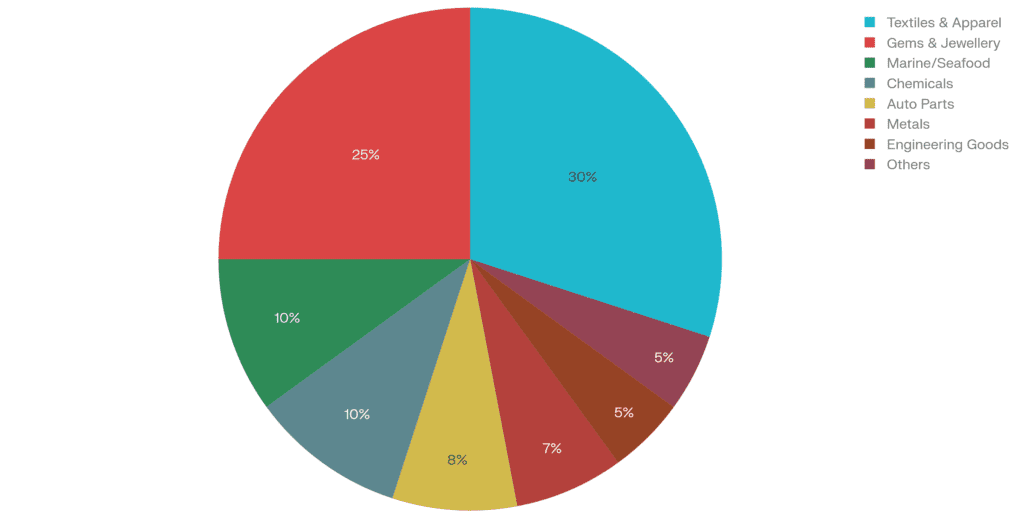
Key sectors at risk for India include pharmaceuticals, IT services, steel, and agricultural products. Any tariff escalation would ripple through export revenues and bilateral relations.
Way Forward for India
India can’t afford to be reactive here. A clear three-track strategy is needed:
1. Defend Trade Interests Actively
India must engage robustly. This engagement is part of the Section 301 investigation. Present data clearly. Challenge findings systematically. Build a legal record. This record should be comprehensive.
2. Strengthen Multilateralism
Work with partners. The EU is one partner. China is another. Brazil matters. South Africa is important. Other WTO members count. Push collectively. Especially for the Appellate Body reform. Push for binding dispute mechanisms. Multilateralism works. When nations stand together, power balances. When nations stand together, rules matter. Isolation weakens, and unity strengthens.
3. Negotiate Strategically, Not Desperately
Any India-US trade deal must be evaluated. This evaluation is on actual merits. Market access matters. IP protections count. Services trade is important. These are the metrics. These are the standards that India must follow.
Conclusion: Rules-Based Order at a Crossroads
The US tariff policy is significant. Section 122 and Section 301 create impact. This is more than a trade dispute. This is more than bilateral friction. It’s a stress test. This test is for the entire multilateral trading system.
When the architect starts dismantling, consequences follow. The architect of global trade rules matters. When this architect dismantles rules, every nation feels tremors. Every other nation experiences uncertainty.
For India, the answer is clear. The answer isn’t to play the same game. The answer isn’t unilateral action. It’s to invest instead. Invest in institutions. Invest in coalitions. Make rules matter. Make rules matter for everyone.
The rules-based order stands at a crossroads. One path leads to chaos. One leads to unilateralism. The other leads to power politics. The result from the first is order. The other path maintains predictability and fairness.
India must choose wisely. She must act strategically. India must defend multilateralism. Not because it’s idealistic. The most important reason is that it’s practical. Because it protects interests. Because it builds security.
What do you think — should India take a harder line with the US on trade, or prioritise the bilateral deal? Share your view below. 👇